Table Of Content
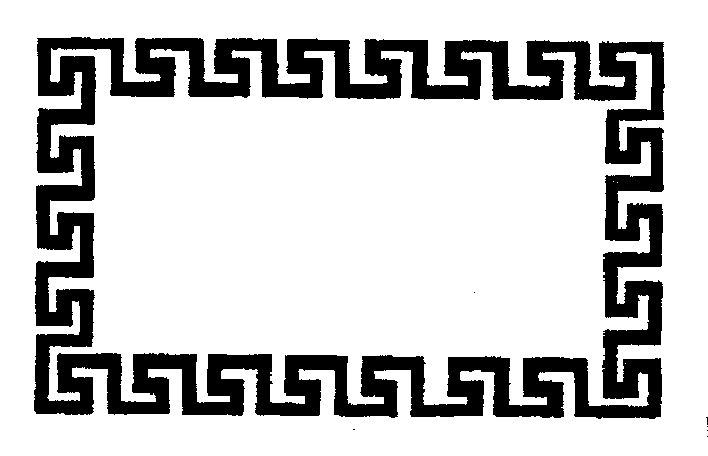
We can carve into hard substances, or we can weave it into fabric using a variety of techniques. Greek Heritage Society of Southern California (GHS) was established in 1985 to preserve the rich culture, heritage and traditions of Greek immigrants in Southern California. Frank Lloyd Wright’s connection to Arizona, the location of his personal winter home Taliesin West, runs deep, with his architectural influence seen all over the Valley.
Please click the image below for more info about my rockin’ Interior Design Guides for 2024!
The O’verlays Site Is the Easiest Way to Hack Your IKEA Furniture - Apartment Therapy
The O’verlays Site Is the Easiest Way to Hack Your IKEA Furniture.
Posted: Mon, 02 Oct 2023 07:00:00 GMT [source]
In the 1500s, it moves from artists in Greece to nearby artists in Rome. Romans incorporate the pattern in marble altars, frescoes, paintings, temples (including a Raphael painting in the Vatican). It grows in popularity via Roman architecture, all the way through the 1700s. The design is so deeply entrenched in China’s history that even now, more than two thousand years later, you can go to an old-school Chinese restaurant in the U.S. and see the same design snaking its way around a ceramic Chinese plate. Crossing to yet another continent, we find the fret pattern next in China at around the same time. Here, it is called Rolling Thunder as the lines are said to represent clouds (and are a good omen for crops because clouds bring needed rain).
Greek Key Border Pattern Generator
Fast forward to the eighteenth century, by which time the motif had made its way into the design vocabulary of most of Europe. It was an ornamental favorite during the French Empire and English Regency periods. And in the nineteenth century, archaeological digs in Greece, Rome, Egypt, and Pompeii turned up Greek key-inspired styles in furniture and art on both sides of the pond.
Five Facts About: The Greek Key Symbol
The greek key symbol is a versatile and enduring motif that has stood the test of time. Its geometric design has made it a popular choice across a range of industries, from architecture to fashion and design. Today, the greek key motif continues to be used in architecture, with the design featuring prominently in interior design elements and home decor.
The design comprises multiple lines arranged in a recurring pattern that bears a resemblance to a key. The most common shape used in the Greek Key is the square, which is repeated to create the continuous line. However, there are versions, including rectangles, triangles, and diamonds. This pattern became particularly important to the classical Greeks and then Romans. A handy, exhaustive resource on Greek key border patterns, including a handy online Greek key border pattern generator to create dozens of variations. In this blog post, we will delve into the geometry and symmetry of the symbol, its connection to the meander pattern, and its varied interpretations in different cultures.
I hope it might encourage the application of this timeless, visually engaging detail as an ornamental accent for contemporary classical architecture. The Greek key or meander was one of the most important symbols in ancient Greece, representing infinity or the eternal flow of things. In modern times, it remains a common theme, replicated in fashion, jewelry, decorative arts, interior design, and architecture. This ancient geometric pattern transcends time, and will continue to be a source of inspiration for decades to come. Greek key, also referred to as meander, is in its most basic form a linear pattern.
In ancient Greece they appear in many architectural friezes, and in bands on the pottery of ancient Greece from the Geometric period onward. The design is common to the present-day in classicizing architecture, and is adopted frequently as a decorative motif for borders for many modern printed materials. The greek key symbol has a rich history and holds significance in various cultures around the world.
Emerging in Ancient China
The mantel is attributed to the London carver and frame maker William Adair, who, with his brother John (died 1771), provided architectural details for both Stuart and Robert Adam. The complex Greek meander is not illustrated in either The Antiquities of Athens or Adam’s Works in Architecture. Nevertheless, the meander was a standard motif in the 18th-century architectural repertoire.
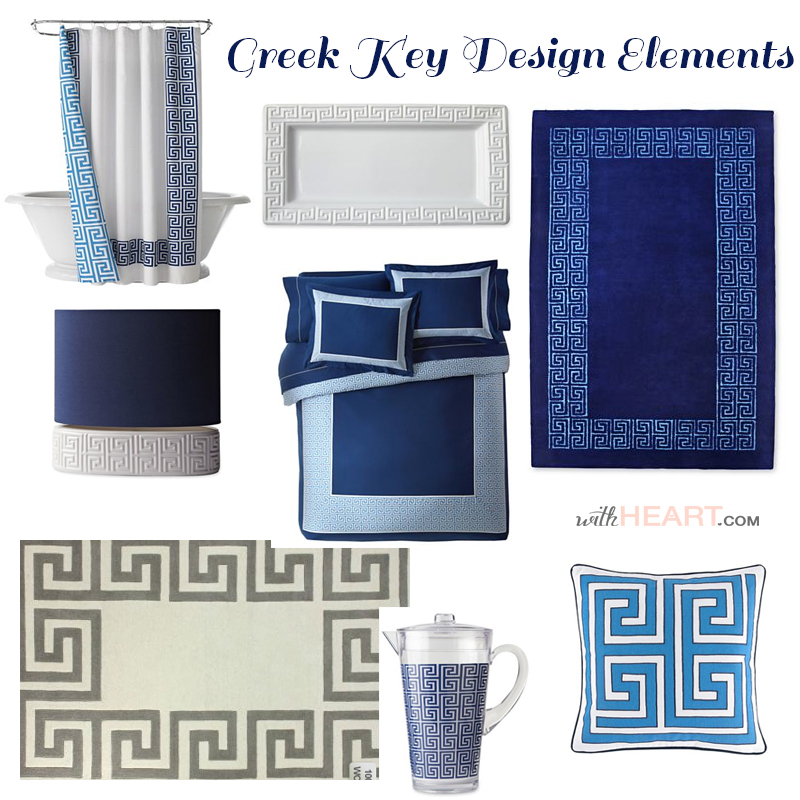
The Greek Key pattern has stood the test of time and continues to captivate with its timeless elegance and cultural significance. From ancient Greece to modern design, this iconic pattern has left its mark on the world of art and decor. I’m pretty sure that these are the most time-consuming drapery panels I’ve ever made. That border certainly isn’t a quick and easy detail (not that it’s difficult, but it’s certainly not quick, especially with all of that topstitching), so I’m still not finished with my living room draperies.
However, the symbol went beyond its practical significance and held a metaphysical meaning; it also embodied the heroic and resilient spirit that epitomized the Greeks. Its modern meaning refers to a purposeless wandering – a directionless journey, devoid of any goal. It embodies the concept of meandering, where the focus is on enjoying the journey rather than reaching a specific destination. I made the following video to show you the full step-by-step process of creating that Greek key design with twill tape or ribbon. Then I placed painters tape just inside the first border of twill tape to give me an even spacer between the two stripes of twill tape.
According to “Psychology Today”; a media organization and magazine, featuring a wide variety of psychologists, anthropologists, sociologists and science journalists, recent finds show the Greek Key was not only a decorative pattern. In its simplest form, the Greek key is a band of short horizontal and vertical lines, connected at right angles and at its most intricate it can form labyrinths and interlocking key patterns. More than likely we’ve all come across the ‘Greek key’, also known as the ‘meander’ (a repeating geometric motif), at some time or another. She holds a Masters degree in Linguistics and Education, and has also studied Political Science, Ancient History and Literature.

I also find that it’s harder to make mistakes or accidentally overlook a measurement (like getting in a hurry and accidentally allowing only four inches for a bottom hem rather than a double four-inch fold). If all of the folds are in place and ironed in, then you can be pretty sure that the placement of the twill tape is just right. I’m giving you those links because I’m not going to repeat the basic steps for making a lined drapery panel in this post. But I think it’s helpful to be familiar with the basic steps so that you can understand how the basic process changes when you want to attach a trim around the edge of the panel. Yes, the greek key symbol can have different meanings depending on the context of its use.
It has stood the test of time and continues to be a popular design choice in modern times because of its meaning and beauty. At its most fundamental, the pattern, also known as the meander motif, is made up of a long, unbroken line that repeatedly folds back on itself. It’s said to mimic the ancient Meander River of Asia Minor, notable for its many twists and turns. (It’s the same 250-mile river known as the Menderes that flows through Turkey today.) The motif was believed to symbolize infinity, or the eternal flow of life. Among many other things, it was used as a decorative border on Greek pottery, mosaic tiles, and temples. The Greek Key pattern is one of the most recognizable motifs in ancient Greek art and architecture.




No comments:
Post a Comment